
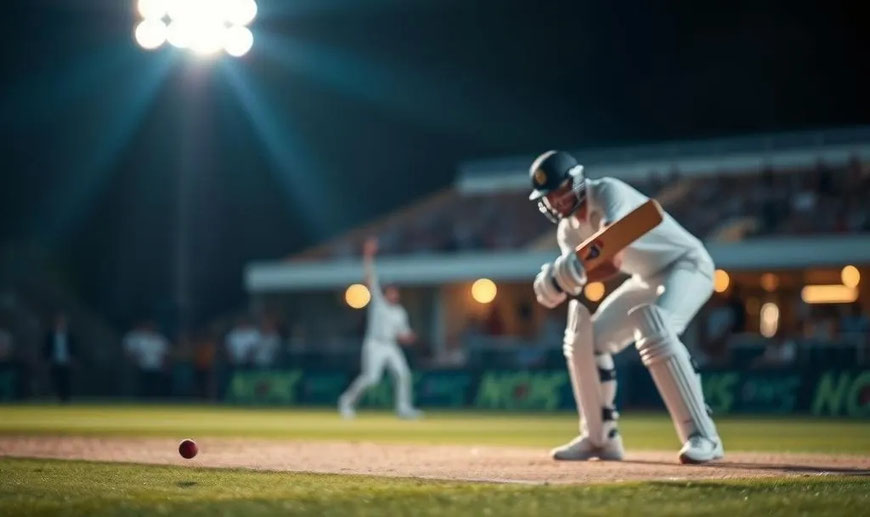
A Question of Sportsmanship
The Cricketing Context
For those who are unfamiliar with the game of cricket there has been a tradition that a batsman who knew he was out would ‘walk’. That is, he would not wait for the umpire to adjudicate but would leave the field of his own volition based on his own acknowledgement that he had been dismissed.
However, in modern professional cricket this attitude has greatly diminished and become the exception rather than the rule. Players justify this by claiming that they are entitled to leave it to the umpire’s judgement. The old sense of good sportsmanship has given way to … something else.
This sets the scene for what I want to explore here. What are the respective roles of players and officials? Why are players playing the game? Is the refusal to ‘walk’ an example of bad sportsmanship, or is there some sufficient justification for it?
We can clarify the question further by noting that there is a generally accepted rule in cricket that if there is any doubt about whether a batsman is out he then receives the benefit of the doubt. If the umpire is not certain that the batsman is out he will indicate ‘not out’. This means that the batsman is entitled to wait for the umpire’s ruling, if he himself is not certain that he is out. Good sportsmanship does not require a batsman to walk if he is uncertain.
There are cases where neither the batsman nor the umpire is certain, usually in the case of a catch, and it has been customary for a batsman to look to the fielder who seems to have taken a catch to ask whether he thought he had indeed caught it. If the fielder indicates ‘yes’ then the batsman would usually walk. Sometimes the fielder himself is not sure and will indicate to the batsman and the umpire that he is not sure. It has not necessarily been considered bad form for the batsman to have doubts about a fielder’s claim to have taken a catch, since there are cases where the fielder can genuinely think he has taken the catch even though in fact he hasn’t. Again, for those not familiar with cricket, this usually involves cases where a catch has been claimed when the ball was very close to the ground.
Cricket is a game where adjudication can often enough be difficult due to doubts about the facts. A fielder who knows for certain that he has taken a catch, yet is questioned by the batsman, and is ultimately denied by the umpire, should demonstrate good sportsmanship by accepting the umpire’s call, and not think badly of the batsman.
If it were not for customs like this cricket would become bogged down in acrimony. This is an important reason why in the past cricket had become a game held to be played with a higher level of good sportsmanship than many other games. Indeed, the expression “it’s just not cricket” has been a shorthand way of drawing attention to bad ‘sportsmanship’ in life generally.
There are other games, such as most codes of football where players almost always simply defer to the referee or umpire because the nature of the game does not readily lend itself to any great degree of self-adjudication by the players. The speed of the game and the fact that players are often, even usually, not in a position to know the facts mean that it makes sense for everyone to defer to the referee. This does not mean that the question of good sportsmanship is irrelevant, but it tends to take on a different form.
In such games good sportsmanship with regard to adjudication generally takes the form of simply accepting the referee’s decision and getting on with it, even when you know that he has got it wrong. The players understand that the officials are only human and will make mistakes at times, but it would interrupt the flow of the game too much to make a big deal out of it, and doing so would reduce the players’ own enjoyment. In such games it is usually in everyone’s best interests if players simply leave adjudication to the officials.
Cricket, however, presents a different possibility with respect to good sportsmanship. The players are often enough in a better position than the umpires to know what the facts are. This applies especially in the case we are examining here - that of the batsman.
There are several ways a batsman can be out which present difficulties of adjudication. We have already noted the difficulty that might arise with respect to a catch, and whether the catch has indeed been taken. The other common situation is whether the ball has actually made contact with the bat, and this can affect decisions related to being out caught, or ‘leg before wicket’ (LBW). Sometimes the only person who would know for certain is the batsman, but even here this cannot be presumed. This is why good sportsmanship is needed on the part of the batsman and of the fielding team.
If it became apparent that a batsman must surely have known he is out, but stands his ground, feigning ignorance, this is likely to lead to some bad feeling from the fielding team. This is compounded if the umpire was himself uncertain and ruled ‘not out’. Usually a batsman would not be so blatant, and would usually walk in cases when he knew he couldn’t get away with pretending not to know whether he hit the ball. However, it is in this zone of uncertainty that the issue lies.
This leads to the present situation in professional cricket where the players themselves seem to have become resigned to a lesser level of good sportsmanship, and tend to justify this rather than bemoan it. This trend has been given impetus by the fact that video review is used in many if not most professional competitions. The players are more likely to abdicate their own role in adjudicating the game and leaving it to the officials. Of course, video review is not infallible, and has actually introduced some further complications - not to mention the time wasted while the game is at a standstill waiting for a decision.
Rules which in the past could be umpired in a common sense manner supported by a code of sportsmanship are now being adjudicated with undue precision, and indeed, new rules and interpretations are being made up to cope with the expectation of exactitude. Yet even with video review exactitude is not always possible and new conventions have to be devised to deal with this. (It is not only cricket that is dealing with this dilemma.)
Thus far I have been simply describing the situation, but the question remains - should a batsman walk if he knows he is out?
What are the results if we decide to try and remove or greatly diminish the role of good sportsmanship? Is it a straightforward adaptation to modern times, or is something intrinsic to sport itself being lost?
What Is Sportsmanship?
Before proceeding we need to clarify what the role of umpires and referees is. Why do games even have such officials? There are two main reasons:
Firstly, the players are not necessarily in a position to be able to determine the relevant matters of fact. Even if among them were some players who were able to see the relevant incident clearly many games depend for their enjoyment on a momentum of play. If play has to be continually stopped while discussions are held about what happened everyone would become frustrated and much of the enjoyment of the game could be lost. This would apply also where spectators were present.
Secondly, human nature being what it is players might be tempted to dishonesty so as to gain an advantage. Or their perceptions might be coloured by unconscious bias. This would not only lead to the kind of delays mentioned above, but would tend to lead to acrimony among the players, and spectators, and this is likely to extend over time, becoming entrenched, affecting not only the particular match but the relations between different teams and their supporter clubs.
Having identified two compelling reasons to have impartial officials, we nevertheless need to note an underlying principle: it is the players’ game.
This means that such officials are there as assistants to the players, not rulers over them. This principle is commonly overridden by the culture of a game which, over time, can become dominated by the subordinate structures that support the game, especially those that enable a game to become professional.
When players accept payment for playing they are entering into an implied agreement that they are in a partnership with the supporting club, its spectators, and the larger competitive structure of which they are part. There are many further issues that arise from this, but for the moment we are only looking at the issue of good sportsmanship and its relation to the adjudication of the game.
Let us look more closely then at the question - what is good sportsmanship? Two things are fundamental:
Firstly, good sportsmanship depends on honesty.
Secondly, this depends on players being impartial about their own situations, as individuals and as a team, being just as concerned to see justice done to an opponent as to themselves.
There cannot be any allowance made that permits partiality to become part of the culture of the game, either among the players or the spectators. This begins with the players, who have to internalise these values individually and reinforce them within their team and club. Their main preoccupation needs to be holding each other to account to this principle. They need to keep their own house in order first. Good leadership is essential in this process, in each team and in all levels of the club or its associated organisation.
When it comes to the adjudicating officials the players need to respect them and feel gratitude towards them for the role they play in allowing the players to gain the enjoyment they get from playing the game. The players need to show leadership to their own supporters, demonstrating the necessary respect themselves, and calling out bad behaviour from their supporters.
When genuine disagreements arise these need to be dealt with in proper ways that do not inflame conflict. The officials also need to play their part by respecting the players and accepting their own role as assistants to the players. They should not ‘lord it over the players’ as if they are the masters, but remain dignified and self-effacing. This does not mean abstaining from giving firm reprimands and penalties as required by the rules.
Some readers might be thinking - “Wouldn’t that be lovely! But in the real world a lot of that goes out the window.” What I am doing here is trying to clarify what constitutes the good of good sportsmanship, not painting a picture of what transpires in every sporting environment. Yet it is not merely ideal, as if it was unattainable. In fact, sporting competitions can and do exist that exhibit a high degree of conformity to this vision of sportsmanship.
Here I am only trying to identify clearly what good sportsmanship consists in, especially as regards the adjudication required in a game. There is a further, rather large question about how a competition could be organised and run to maximise the chances of making this a reality.
So, should a batsman walk?
Yes.
It is a requirement of honesty and fairness. The kinds of excuses offered along the lines of “leaving it to the umpires” simply avoid the fundamental question. For each player it is a personal decision for which he needs to take full responsibility. The encouragement and development of good character is one of the primary purposes of sport.
There is a hierarchy of values, and in that hierarchy the fostering of good character is a higher value than winning.
There is no downside to a culture of ‘walking’, and a great deal of upside. One of the unfortunate consequences often found, in professional sports especially, is that winning and losing become entangled with other considerations so that players can lose some clarity of thought about these things.
Everybody appreciates the pressures that high level sport can have, and how much seems to be at stake. So the temptation is to allow these secondary matters to corrupt the game itself. Supporters are inclined to participate in this process by making excuses for the actions of players in ‘their’ team. This attitude can become general across a whole sport shaping a culture that accepts compromised sportsmanship, seeing such matters as subordinate to winning.
It is incumbent on both players and supporters to ensure this inversion of values does not take place, and especially that it not become normalised in the team, the club or in the culture of the game itself.